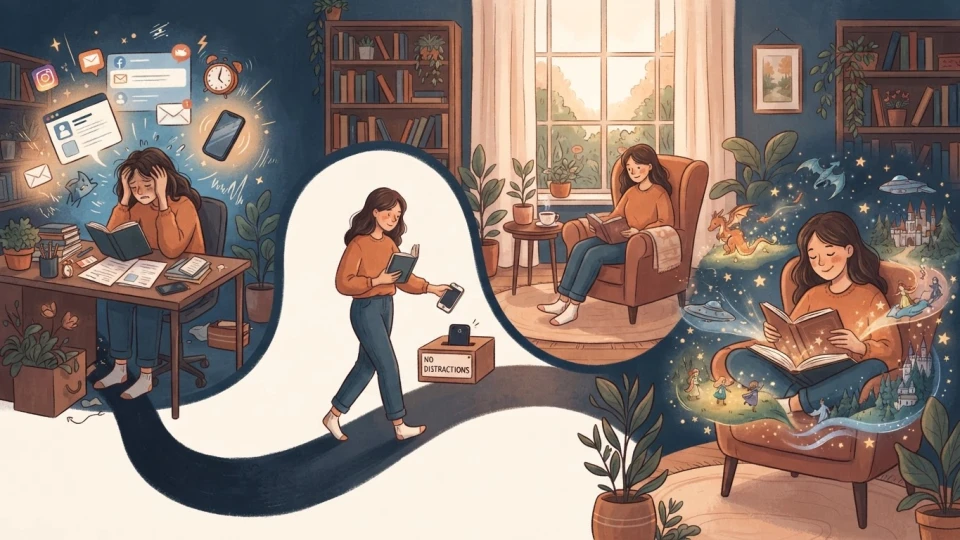

How to Stop Using Your Phone: Setting the Environment Instead of Struggling with Willpower
Learn how to effectively reduce the time spent on your phone by adjusting your environment instead of battling willpower. Discover tips and strategies for more mindful technology use and improving your quality of life.
Mobile phones have today become an essential attribute of almost every person. In essence, they have replaced numerous devices for us — from televisions to laptops. Light, compact, and multifunctional smartphones have turned into our assistants, sources of information, and entertainment.
But there is a catch. Everyone talks about children's addiction to phones, yet somehow they neglect the fact that this problem has long affected adults as well. Hours of scrolling through social networks and endlessly watching videos do not benefit us. On the contrary, they steal time that could be spent much more productively.
Those who have realized the dangerous side of gadgets have likely already asked themselves: how to stop sitting on the phone for hours? However, this concerns a habit that is very similar to smoking or gambling. When a person becomes accustomed to performing an action automatically, giving it up becomes very difficult.
Of course, one can try to rely on willpower. For instance, one can set specific times for using the phone and keep it in a far drawer during other times to avoid temptation. But what about phone calls? And where is the guarantee that after a phone call you won't automatically open a browser or social media?
The task becomes even more challenging if you are used to constantly communicating with friends online. Frequent texting, sending funny videos, memes, and jokes pull a person into the abyss called "phonomania."
However, it is still possible to rid oneself of this addiction. It is not necessary to throw away your smartphone or completely abandon modern technologies. Sometimes, it is enough to change your environment.
Change Your Familiar Surroundings
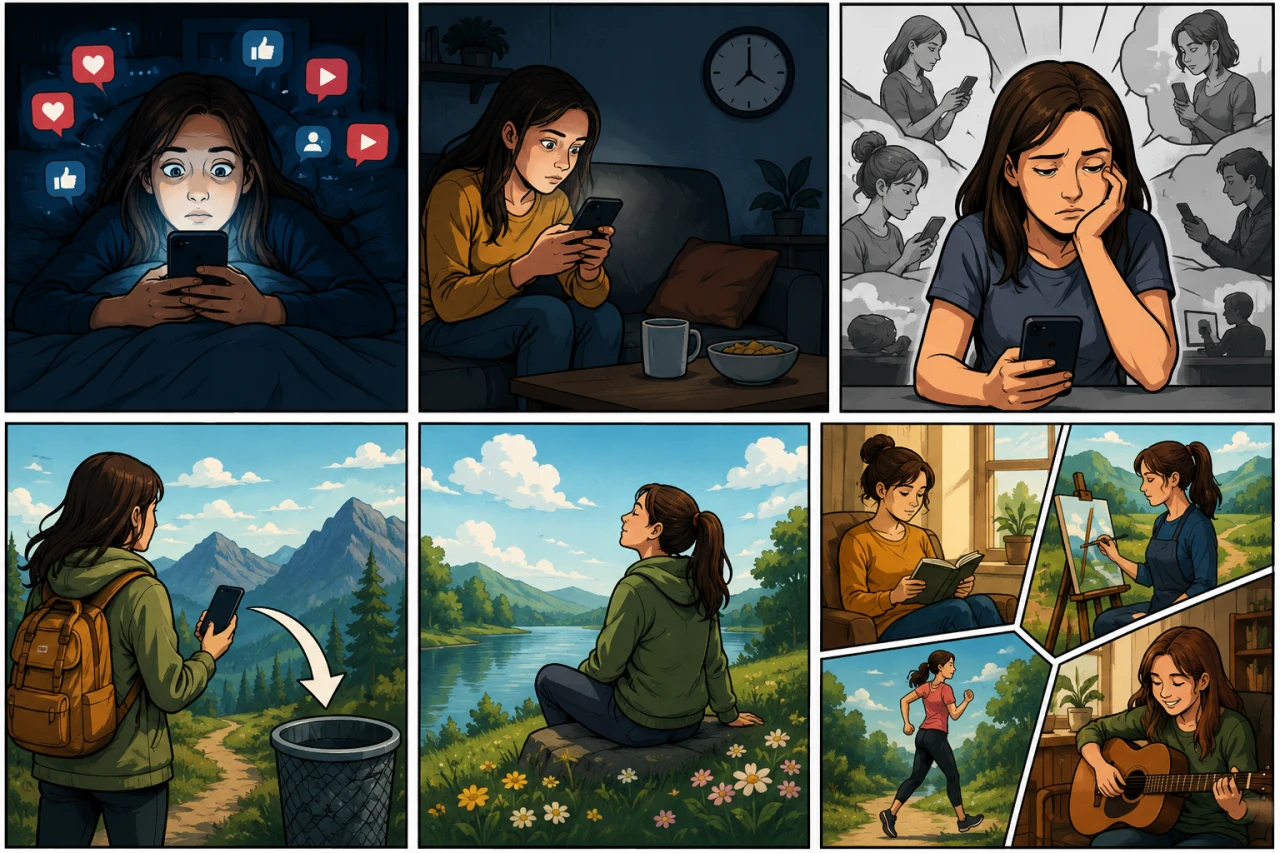
Try organizing a long trip to a place where there is no stable mobile signal and access to the internet. This could be a visit to elderly relatives in a remote village or a vacation in another country where mobile internet and roaming are too expensive.
You can also find a country estate or a holiday base in a beautiful area located far away from mobile towers. In such an environment, you simply won't have the opportunity to constantly sit on your phone.
Instead, you can engage in other activities:
- sunbathing and swimming;
- hiking or long walks;
- exploring local attractions;
- interacting with people in real life;
- getting acquainted with the local way of life;
- reading, exercising, or being creative.
Gradually, you will immerse yourself in the new environment so much that you will recall your phone and the habit of constantly checking notifications much less often.
Consolidate the Result After Returning
The longer you stay in a new environment, the higher the likelihood of weakening your dependence on your smartphone. However, after returning to your familiar life, it is important to make an effort to maintain the results achieved.
Let your acquaintances know that it’s better to call you rather than sending dozens of messages. Even better — meet in person more often. Also, try to find an additional activity that you will genuinely enjoy.
This could be:
- reading books;
- crafting;
- drawing or music;
- attending courses and classes;
- sports and regular workouts;
- walking and traveling;
- any other engaging hobby.
When a person is absorbed in an interesting process, they have significantly less time and desire to aimlessly scroll through feeds or watch short videos.
Give Yourself Time
There is a popular belief that it takes a person about 21 days to form a new habit. So, try to stick to the new routine for at least three weeks.
Limit aimless smartphone use, fill the freed time with meaningful activities, and closely monitor your automatic actions. Gradually, the desire to constantly pick up your phone may become noticeably weaker.
Over time, you will notice how many useful and interesting things can be accomplished in just one day if you don’t spend several hours endlessly scrolling through feeds.