

How to Start Exercising from Scratch and Not Give Up After a Week
Learn how to start exercising from scratch and maintain motivation in the long run. Practical tips, effective workouts, and strategies to avoid quitting after a week. Change your life for the better with regular physical activity!
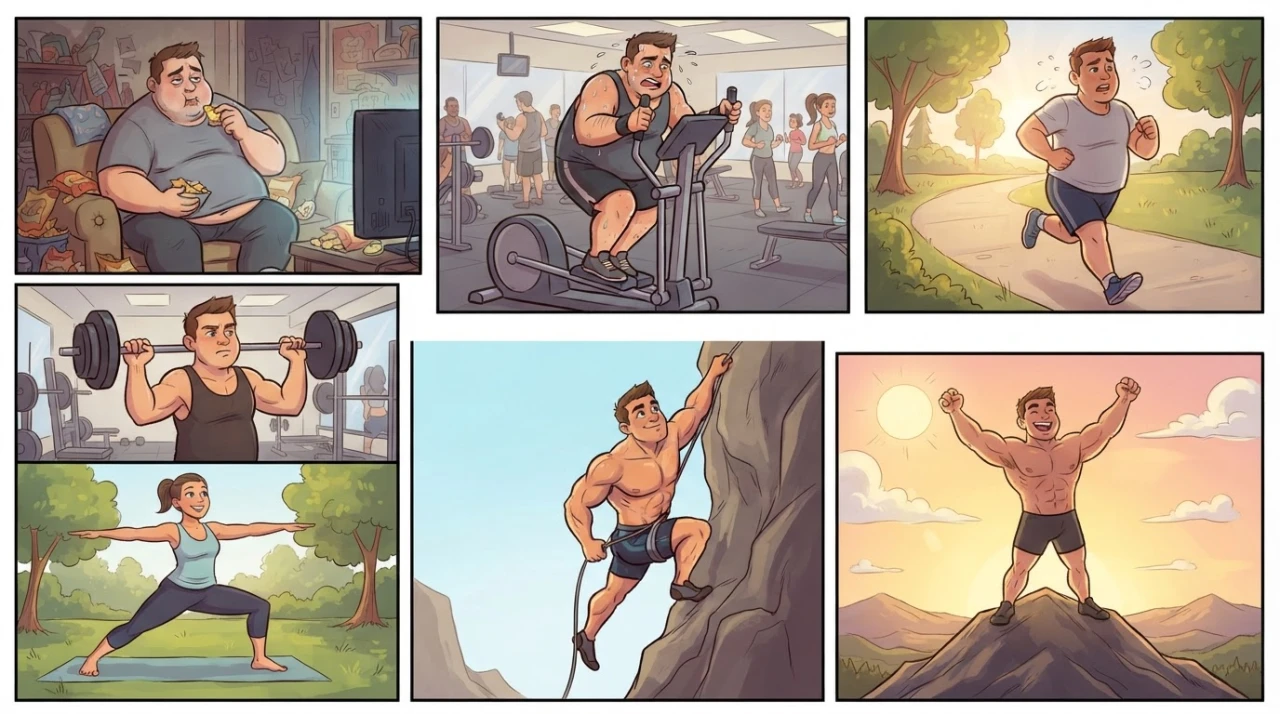
We all know how important physical activity is. We know that jogging and even light workouts help maintain health, shape, and weight. However, many people find these facts do not motivate them to engage in regular sports activities.
Work, studies, and daily life consume a lot of time. It’s no surprise that we want to dedicate our free minutes to relaxation rather than additional exertion. Moreover, we often simply feel lazy to go to the gym, fitness classes, or go for a run.
If you are still contemplating how to start exercising from scratch and not quit after a week, just a few rules can help you with this. Try to follow them, and you will see how your life changes.
Rule 1. Determine which sport you want to do
The success of any endeavor largely depends on your positive attitude towards it. If you don’t enjoy your activities, you are likely to quit. Fortunately, there are plenty of options to choose from today.
Decide on the type of sport you desire the most:
- Strength or cardio training;
- Running or walking;
- Group fitness classes or individual work at the gym with a trainer;
- Yoga, Pilates, dance-element workouts;
- Solo activities at home.
Perhaps you love riding a bike or jumping rope? Or you’re into swimming? All of this is perfect for starting active training.
An important component is the budget. If you plan to attend paid classes, make sure they are affordable for you. And try to pick out stylish workout clothes – this will serve as additional motivation for regular gym visits.
If you feel shy about going to places where people with toned bodies work out, try starting with home workouts. You can go to the gym once you feel mentally prepared for it.
Rule 2. Start not with a goal, but with limitations
Most beginners set a specific goal for themselves. Some want to achieve a “sporty” body, while others dream of participating in marathons. Women often wish to lose a specific number of kilograms.
Unfortunately, lofty goals can lead to disappointment. If you start with exhausting workouts, within a few days you will feel wild fatigue and irritation. And if, by the end of the first week, you don’t notice any results (as usually happens), you risk getting discouraged and giving up halfway.
It’s much more effective to set reasonable limitations for yourself. For example:
- Start with a 10-minute workout;
- Set a maximum number of sets for each exercise;
- Exercise no more than 2 times a week;
- Dedicate only evenings after work or studies to sports.
If you plan to lose weight through sports, also introduce limitations in your diet. Remember that weight loss is only possible when combining physical activity with a proper diet. And be careful in choosing the sport – running, swimming, jumping rope, interval exercises, and strength training with weights are suitable for weight loss.
Rule 3. Gradually increase the loads
Standard workouts in gyms are designed for 45-60 minutes. This doesn’t mean you need to start with that duration. If you haven’t exercised in a long time (or ever), start with short workouts. Even 10-20 minutes in the first week will be sufficient. Under no circumstances start with daily sessions.
In general, consider the first week as an "introductory" phase. Pick the easiest set of exercises that won’t challenge you. Focus on the correctness of your technique rather than the number of sets. And starting from the second week, begin to complicate your workouts and increase their duration.
Overall, the plan for the first four weeks might look like this:
- First week – 20-minute workouts on Monday and Thursday;
- Second week – 30-minute workouts on Monday and Thursday;
- Third week – 30-minute workouts on Monday, Wednesday, and Friday;
- Fourth week – 45-minute workouts on Monday, Wednesday, and Friday.
You can choose the days of the week based on your everyday commitments. The same goes for the exercises you will include in your workouts.
Rule 4. Don't fear muscle soreness and missed workouts
With increased physical loads affecting all parts of the body, muscular soreness can occur. It usually appears the day after the workout. Don’t be frightened – relaxing baths can help relieve painful sensations. If you suffer from muscle spasms, consider using special ointments and gels. Also, consult a doctor or coach about the nature and intensity of workouts.
And don’t punish yourself for missed workouts. Various situations can arise – feeling unwell, fatigue after work, or simply wanting to give yourself a short break. A week of missed workouts is not considered a failure if you manage to gather your strength and continue the following week.
Are you into sports?