
Can AI think independently and make discoveries?
Can artificial intelligence think independently and make scientific discoveries? Learn about the current state of technology, capabilities, and prospects for the development of AI in the fields of creativity and science.
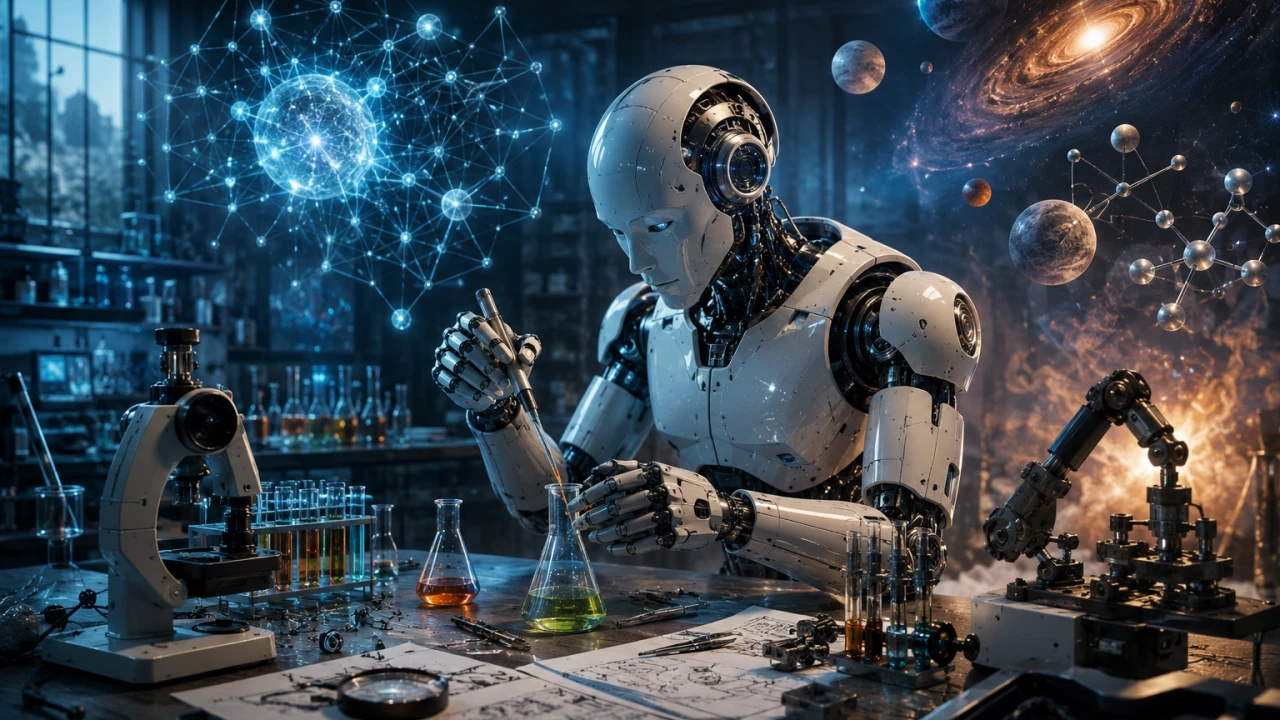
I think that even in its current implementation, AI is already capable of finding something new — something that humans might have simply missed in the vast amounts of information. Essentially, artificial intelligence was created precisely to search for hidden correlations in datasets. But the question remains: will it be able to discover something fundamentally new, something that humanity does not yet know at all?
If we look at the history of science, many discoveries happened by accident. Someone mixed something incorrectly, assembled a device "not according to directions," or conducted an experiment that was not supposed to work — and in the end, something new resulted.
For example:
The discovery of penicillin occurred because Alexander Fleming simply left laboratory dishes with bacteria and then noticed that mold had destroyed them.
Viagra was actually developed as a heart medication, but in the end, the most famous effect turned out to be completely different.
And there are a huge number of such examples.
Therefore, I believe that AI will indeed be able to make new discoveries, but only if it is given more opportunities to interact with the real world. Right now, it has vision, sound processing, some robotic manipulators, but that is not enough. It does not feel the physical world like a human: it does not understand pain, destruction, randomness, and the consequences of mistakes.
The more sensors, tools, and freedom for experiments AI has, the greater the chances for real discoveries. And perhaps the most groundbreaking AIs will be those that can conduct "absurd" experiments — understanding in advance that the chance of success is minimal, but still trying again and again. Something like the human "what if it works."
It seems to me that it is at this moment that artificial intelligence will be able to reach the level of truly important discoveries.
The main thing is that in the end, this does not turn into Skynet :)
What do you think — is it possible to create AI that becomes completely autonomous? And in what direction should humanity move to achieve this?